
The next generation of building, energy and infrastructure management
One platform to manage, control, monitor and automate multiple buildings, sites, users and systems, in real time, from one place.
ZiGGi gives large organizations and institutions a complete, real-time view, smarter control of complex processes, and a significant cut in operating costs and in wasted energy, time and resources.
As the organization grows, so does the complexity
Large organizations run dozens of buildings, systems, vendors, users and processes at the same time. When every system runs on its own, information is scattered, many processes stay manual, faults are found too late, and getting a true real-time picture is hard.
How many separate systems do you maintain today just to get one picture?
What does a fault cost when it's found one day too late?
How many of the calls you went out on turned out to be wasted trips?
What happens to your site the moment communication goes down?
Faults are found only after they're already affecting operations.
Manual work and constant site visits wear teams down.
Unmonitored consumption leads to unnecessary spending.
Too many systems and vendors drive up maintenance costs.
ZiGGi was built to bring all of this complexity into one management system.
One system. One view. Full control.
ZiGGi is an advanced command and control platform for managing multiple sites, buildings, users and systems from a single interface. It brings together monitoring, control, automation, energy management and artificial intelligence, moving the organization from reactive management to smart, proactive, data-driven management.
Control and automation
Control every system, with automated scenes across sites.
Energy management
Real-time consumption monitoring and waste detection.
Artificial intelligence
Insights, pattern detection and efficiency recommendations.
Full control
One view of the entire organization, from one place.
It spots problems before you go looking
With traditional systems, the organization finds out about a problem only after the damage is done, usually from a report in the field.
The alert comes before the call
ZiGGi monitors your systems in real time, detects anomalies and sends alerts automatically: leaks, unusual power use, temperature changes and system failures, before they turn into a serious operational or financial problem.
Instead of you hunting for the fault, the system brings the fault to you.
Smart automation at enterprise scale
Processes that used to require manual work, coordination between staff or switching between several systems now run automatically.
One action. Every site.
Create automated scenes and processes for a single building or for the entire organization: run actions across multiple buildings, sites or systems in one step, with logic that fits the organization's policies and needs.
AI that makes complexity simple
The artificial intelligence in ZiGGi is more than another layer of data: it detects anomalies, analyzes usage patterns, suggests ways to improve efficiency and supports decision-making.
No training. No jumping between interfaces.
You can talk to the system in natural language and by voice, so even users with no technical background can get information and take action. Instead of learning complex systems or digging for data, users simply ask for what they need.
The technology is complex. Using it shouldn't be.
Every system. One place.
With ZiGGi, you can manage and connect a wide range of systems and infrastructure under one central control layer. Instead of switching between interfaces, vendors and systems, the organization gets one central dashboard that shows the whole picture.
From consumption data to accurate billing
Beyond control, monitoring and automation, ZiGGi turns the data stream into financial information: accurate metering and automatic billing for every unit, even when the organization manages many buildings, units, tenants and users.
Consumption metering for every unit
Smart meters measure power and water use for each unit separately and in real time. An accurate data foundation for billing, tracking and spotting anomalies, with no manual meter reading.
An automatic bill for every tenant and unit
Automatic calculation and billing for each unit separately, including splitting the cost of common areas, variable rates and VAT. Less manual work, fewer errors and transparent bills.
Savings you feel at every level of the organization
Bringing management, monitoring and automation into one place delivers real savings in money, time and resources.
Saving money
Lower energy use, less waste, anomalies caught in time, and fewer faults and cumulative damage, plus fewer site visits and unnecessary service calls.
Saving time
Fewer manual checks, less meter reading, less switching between systems, and less time wasted tracking down faults and pulling reports.
Saving resources
Better use of staff, energy, water and infrastructure, and teams sent only where they're really needed.
More control. Less waste. Less operational load.
From traditional solutions to smart management
The same operational challenges, two completely different ways to handle them.
Comparison of a smart building management system (ZiGGi) with traditional building control solutions
Built for complexity. Designed for growth.
ZiGGi was built from the ground up to manage multiple sites, users and systems, and to grow with the organization.
Full control over multiple users and permissions
Control isn't only about knowing what's happening. It's also about who is allowed to do what. Multi-level permissions, user and role setup, and an action log, for transparency, oversight and clear accountability.
Keeps working even when the cloud doesn't
A hybrid architecture that combines the cloud with local logic. Even when communication is lost, the local controllers keep running, and once it's back, the system syncs and completes pending actions. Operational continuity, even in less-than-ideal conditions.
A system that grows with the organization
Works at any scale, from a single building to a full network of buildings, sites and thousands of devices. A modular architecture lets you add capabilities, users and systems without replacing your existing infrastructure.
Open. Flexible. No vendor lock-in.
Support for connections and integrations through APIs and a range of protocols, bringing existing and future systems under the same management layer, with no dependence on one closed solution.
Who is it for?
ZiGGi is designed for organizations and institutions that manage multiple sites, buildings, systems and users, and that run complex infrastructure.
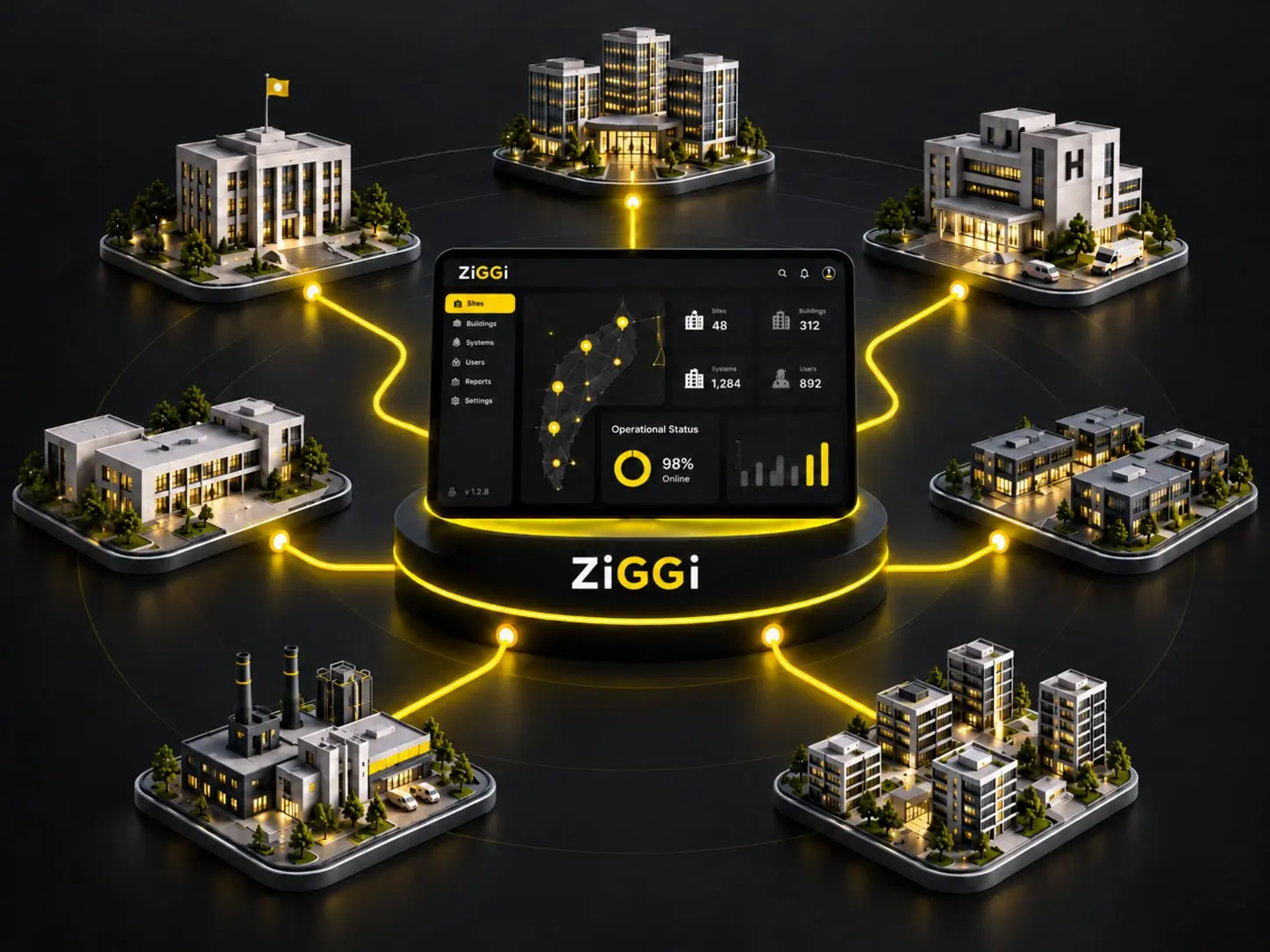
Public buildings, schools and city infrastructure across dozens of sites, under one management layer.
HVAC, power and critical systems across many branches and clinics, with early alerts on anomalies.
Lighting and HVAC scheduled by operating hours, with consumption metered separately for each building.
Many buildings and tenants on one campus, with separate metering and billing for each unit.
A whole property portfolio managed from one interface, with role-based permissions and automatic tenant billing.
Monitoring of energy use and operational systems by production line, area or shift.
These are just some examples. ZiGGi fits any organization that manages more than one site, more than one system and more than one user.
Frequently asked questions about building management systems
What to know before choosing a system for building management, building control, energy management and smart-meter billing.
A building management system is a software layer that brings monitoring, control and automation of a building's systems (power, lighting, water, HVAC, pumps, access control and sensors) into one interface. Instead of running each system separately, the organization gets one view and central control in real time.
Traditional building control focuses on local control of a single building, usually through a dedicated interface and with dependence on one vendor. A modern building management system adds an organization-wide management layer on top: multiple sites in one interface, automations across buildings, data analysis, role-based permissions and open integration through an API.
Smart meters measure power and water use for each unit separately and send readings automatically, with no manual meter reading. The data becomes the basis for accurate billing, consumption tracking and spotting anomalies.
Yes. The system calculates and bills each unit separately based on actual metered usage, including splitting the cost of common areas, variable rates and VAT, so bills are transparent and take less manual work.
The savings come from three directions: continuous monitoring that catches anomalies and unnecessary consumption before they add up on the bill, automation that turns systems off or dims them when they're not needed, and early alerts that prevent faults and damage, plus fewer site visits and unnecessary service calls.
Yes. The architecture is hybrid, combining the cloud with local logic, so on-site controllers keep running even when communication is lost. Once power or communication is restored, the system syncs automatically and completes any scenes that were missed.
Lighting, power and energy, water, HVAC, pumps, refrigeration, access control, irrigation, sensors, building infrastructure and smart meters. Connections are made through an API and standard protocols, so existing and future systems can be integrated with no lock-in to a single vendor.
Organizations and institutions that manage several sites at once: local authorities, health funds and hospitals, educational institutions, industrial parks, property management companies, factories and organizations with complex infrastructure.
When an organization sees the whole picture, it can manage differently.
ZiGGi connects systems, people and data in one platform that helps the organization run more efficiently, cost-effectively and intelligently. From day-to-day control to long-term planning, the system provides the tools to cut costs, save time and resources, and improve operational performance across the entire organization.
Enterprise & public sector solutions→